Thursday, July 7, 2022

The Reverend John Dewey

This week was a bit hectic. I went to visit the Fam for the Canada Day/Anniversary/Independence Day long weekend and when I got back home I had to really work my arse off to get everything finished. I almost did it too, but because of computer trouble I missed two of the marking assignments for one class. I was finished the one and tried to submit it, but time ran out. It won't hurt my grade a lot though. This week I'm going to their place for KD camp! That's Kelly and Dave, not Kraft Dinner. I'll be there just over a month and by the time I'm finished a lot of things will be different. I'll either find a new job and get a work visa, or extend my D-10 looking for work visa and stay in Gongju, or there could be other options. We'll see what happens... Anyway, here is the writing assignment from this week that I liked best:

The Reverend John Dewey

John Dewey was a religious man. He taught Bible classes and lectured on living a proper, Christian life (Murray, 2017). When I was reading his chapters about experience in education, I didn’t hear him teaching, I heard him preaching and I felt like standing up in my chair as if from a church pew and shouting, “Amen,” or “Preach it Grandpa Dewey!” Just as Reverend Martin Luther King Junior got fired up repeating many of his hopes for America starting with that familiar phrase, “I have a dream,” to the building applause of the marchers for freedom on that day in Washington in the summer of 1963, I could almost see Dewey imagining a similar crowd and growing waves of applause and accord as he listed off some examples of miseducative experiences common to traditional schools each beginning with the phrase, “How many (students)?” (Dewey, 1938).

It was hard not to feel his passion even in his somewhat stilted, formal style of an era in which academic writing that Pinar referred to as “journalistic” (Pinar, 1978) was not taken very seriously. It is an emotional experience to see students’ impetus to learn being lost; their senses being dulled by rote learning; their association of school to boredom developing; their love of reading wasted; and their collective realization of the irrelevance of their school experiences (Dewey, 1938). It is especially difficult for a teacher who cares. These were some of the “miseducative” experiences Dewey believed distorted or arrested the growth of further experience and he sought, through progressive methodology, to replace them with experiences that were informed by the past, enlightened the present and encouraged similarly educative experiences in the future (Dewey, 1938). He felt that teachers should not only employ experiential learning that was shaped by past learning in order to shape future learning in their students, Dewey believed on moral grounds that teachers had no right to withhold this essential, informative experience from their students (Dewey, 1938).

Cheryl Craig’s mention of Li, Conle, and Elbbaz-Lewisch’s “pedagogy of narrative shifting” struck a nerve for me as well in that I believe academic environments of today might be more polarized than ever and making the standoffish atmosphere more malleable through narrative inquiry can be an invaluable classroom resource (Craig, 2011). As an ESL educator in Korea, I see a developing dissonance between modern ideas and traditionally held concepts, not just in education, but in politics, religion, economics, and social arenas, so in my opinion, contextualizing current student experiences with similar examples from history as well as my personal experiences serves to make class more relevant and engaging.

This may conflict with the prevailing traditionalism in Korean education, which has had a longstanding symbiosis with industry and social customs here, but Korean educators are warming up to progressive techniques such as experiential education as they see positive learning outcomes. I have personally witnessed the evolution of the Korean student from the passive vessels into which knowledge is poured then poured out of and onto exam papers (Yi, 2016), to a more inquisitive, active, and creative bunch, and it has been encouraging.


References

Craig, C. J. (2011). Narrative inquiry in teaching and teacher education. Advances in research on teaching, 13, 19–36. Retrieved July 1, 2022, from https://www.researchgate.net/publication/235282657_Narrative_inquiry_in_teaching_and_teacher_education

Dewey, J. (1938). Experience and education. Touchstone. https://doi.org/http://ruby.fgcu.edu/Courses/ndemers/Colloquium/ExperiencEducationDewey.pdf

Murray, W. R. (2017). John Dewey, God and the religious education of the American people. Theology Today. Retrieved July 1, 2022, from https://doi.org/https://journals.sagepub.com/doi/abs/10.1177/0040573616688732?journalCode=ttja#:~:text=In%20Michigan%2C%20Dewey%20%E2%80%9Cwas%20active,The%20Place%20of%20Religious%20Emotion.

Pinar, W. F. (1978). The reconceptualisation of curriculum studies. Journal of Curriculum Studies, 10(3), 205–214. Retrieved June 28, 2022, from https://doi.org/http://daneshnamehicsa.ir/userfiles/file/Resources/8-2%29%20Ideologies/ARTICLE_William%20Pinar.pdf

Yi, C. (2016). Investigation of Chinese students' passive learning in EAP classroom. US-China Foreign Language, 14(5), 357–363. Retrieved July 2, 2022, from https://www.researchgate.net/publication/311630790_Investigation_of_Chinese_Students'_Passive_Learning_in_EAP_Classroom


Wednesday, June 29, 2022

Alfie and Jack

 Another week has been completed in my 3rd and 4th courses of my master's. Summer has set in. It's now just as important to have the air conditioner going to de-humidify as it is to cool. Laundry is about 40 minutes to wash and three or four days to dry. I went to the farther away grocery store today to get some things that are cheaper than the Ass Mart. It's only a 40-minute walk, but in the heat and humidity (28 degree Celsius and raining) it was a full on sweat. Here is what I have chosen to be the best thing I wrote this week. I'm not sure I'll get the best grade on it because it's basically slagging most of the crap I read in the course this week. But it deserved to be slagged. Read and see...

                                                              Alfie and Jack

“The whole field of classroom management amounts to techniques for manipulating students’ behavior. This takes for granted that the fault lies with the children” (Kohn, 1995). Reading theory on classroom management through the clarification the above quotation provides could save a lot of teachers a lot of time experimenting with methodology endowed with impressive titles like “control theory,” “internal motivation,” “differential reinforcement,” “positive discipline,” “win-win discipline,” “cooperative discipline,” and “love and logic” all of which seem to have their lists like “9 essential skills for teachers,” “7 roads to trouble,” “3 types of teacher,” “4 goals of misbehavior,” “7 positions,” “5 P’s,” “4 mistaken beliefs,” “3 tiers of behavior management,” “5 basic needs written into our genetic structure,” and so on. Just looking at that sentence could overwhelm a teacher. However, armed with the Kohn quote and one from Aldous Huxley about a “really efficient totalitarian state,” a teacher can get a good indication of what they are up against in regard to classroom management, a field Henry & Abowitz write is ever “vulnerable to the novelty and appeal of ‘the latest thing’” (Henry & Knight Abowitz, n.d./1997). The quote from Huxley states that a “population of slaves who do not need to be coerced because they love their servitude (Huxley, 2010) would make the best totalitarian state. Huxley goes on to say that the task falls to ministries of propaganda, newspaper editors, and teachers (Huxley, 2010).

If one thinks of the classroom as a totalitarian state in which the teacher’s classroom management responsibilities include making the students love their servitude, you will understand why it is “an especially fertile terrain for any technique or plan which promises effective ways to make the classroom a peaceful and productive place” (Henry & Knight Abowitz, n.d./1997). If you then consider the fact that if students were to spend the same amount of time doing anything else that they spend in the classroom, it would be considered deviant, unhealthy, addictive, even crisis behavior (Carney, 2015), you might get an inkling that maybe the number one stressor for teachers – misbehavior (Nelsen & Gfroerer, 2017) is not necessarily the fault of the kids. It enables the sagacious reader to see through some of the logical and promising sounding terminology of classroom management theory by taking the perspective of the student. As Alfie Kohn wrote, try not to focus on the child who doesn’t do what he’s told, but on what he’s being told to do and how reasonable it is (Kohn, 1995).

One of the best examples of classroom management theory that is practicing totalitarian coercion and not considering the student’s point of view is the hypothetical example of “Jack” given in the writings of Spencer Kagan creator of “win-win discipline” and the list of “7 positions” from which a student’s misbehavior originates (Kagan, 2002). In the scenario, Mrs. Johnson announces a homework assignment and Jack slams his book on the floor and yells, “I’m not going to do those stupid problems and you can’t make me.” Mrs. Johnson assumes Jack’s disruptive behavior comes from position 4 on the list, the control-seeking position. Mrs. Johnson then tells Jack that it is his choice to do the homework, she can’t force him. He will not receive the homework points, but he is in control of that (Kagan, 2002). If Jack is misbehaving from position 2, avoiding embarrassment, then Mrs. Johnson will meet with him privately and relate to Jack’s needs to practice more and this will give him a higher chance of success. (Kagan, 2002). Of course, none of this is true. Jack is under the control of a totalitarian education system, not to mention parents, and the goal of it all seems to be this arbitrarily created objective of passing the class, which he neither understands, nor buys into. He’s upset because he sees his teachers more than his parents and then when he gets home, he has even more schoolwork to do. Besides, homework doesn’t help. Alfie Kohn wrote a whole book on that (Kohn, 2006). Jack is right, but there is no “position” on the list of 7 for what to do when a student is correctly exposing problems with the education system.

Admittedly, the revolutionary change the Kohn theories support would not be welcomed by everyone. There are reasons why some countries have kids in schools for long hours and unsurprisingly, in countries where parents tend to work longer hours, children spend longer hours in the classroom. Also unsurprisingly, a lot of the same countries have education systems that are highly influenced by very strong industrial lobbies.  Most of these countries have expensive daycare as well. As much as a teacher hates to hear it, part of the job is taking care of kids while parents (more and more often both parents) are working. Revolutionary thinking like addressing the real reasons there are so many behavioral problems in schools is possible, take Finland for example (Loveless, 2022), but few countries are willing or able to make the commitment Finland has made. Despite its unquestionable success, their education system frightens people.

For industry and people with strong political commitments or who are fearful of the costs of educational revolution, the Kagan system is a positive alternative to doing what Finland did and what Kohn would like to see in America, and that is understandable. This author would love to see such an educational revolution in Canada and is a huge Alfie Kohn fan. There is hope that industry’s changing needs due to automation could finally open other countries to more Finnish-like education systems, but that is only likely to happen when industry is good and ready. Until then, teachers will have to plate spin the many classroom management theories instead of addressing the actual sources of the behavior problems. “Changing your behavior and strategies is often the most efficient and effective means of improving all types of classroom behaviors… The building block of emotions and behavior likely contains the largest and most diverse set of problems encountered in the classroom. By first understanding these problems and seeing the world through the eyes of your students, and, by then developing and using a set of intervention strategies on a regular basis, problems of emotions and behavior can be effectively managed and changed in the classroom” (Mather & Goldstein, n.d.). That should take 20-25 years of experience or so.


                                                                   References

Carney, M. (2015). Internet-addicted South Korean children sent to digital detox boot camp. ABC News Australia. Retrieved June 18, 2022, from https://www.abc.net.au/news/2015-09-13/south-korean-children-seek-help-at-digital-detox-boot-camp/6769766

Henry, S. E., & Knight Abowitz, K. (1997). Interpreting Glasser's control theory: problems that emerge from innate needs and predetermined ends. In R. E. Butchart & B. E. McEwen (Eds.), Classroom discipline in American schools: problems and possibilities for democratic education (pp. 157–163). State University of New York Press. (Reprinted from n.d.)

Huxley, A. (2010). Brave New World (11th ed.). Vintage.

Kagan, S. (2002). What is win-win discipline? Kagan Online Magazine. Retrieved June 27, 2022, from https://www.kaganonline.com/free_articles/dr_spencer_kagan/ASK15.php

Kohn, A. (1995). Discipline is the problem - not the solution. Learning Magazine. Retrieved June 27, 2022, from https://www.alfiekohn.org/article/discipline-problem-solution/

Kohn, A. (2006). The homework myth: Why our kids get too much of a bad thing. Cambridge, MA: Da Capo Life Long. https://www.alfiekohn.org/homework-improve-learning/

Loveless, B. (2022). 27 surprising Finnish education system facts and statistics. Education Corner. Retrieved June 27, 2022, from https://www.educationcorner.com/finland-education-system/

Mather, N., & Goldstein, S. (n.d.). Behavior modification in the classroom. LD online. https://www.ldonline.org/ld-topics/classroom-management/behavior-modification-classroom

Nelsen, J., & Gfroerer, K. (2017). Positive discipline tools for teachers: Effective classroom management for social, emotional, and academic success. Harmony Books. https://doi.org/https://books.google.co.in/books?id=GgEQDQAAQBAJ&printsec=frontcover&dq=positive+discipline&hl=en&sa=X&redir_esc=y#v=onepage&q=positive%20discipline&f=false


Friday, June 24, 2022

My Homework

 Since I'm writing so much for the course I'm taking, this blog is being neglected. It's not like I'm not writing, I'm just not blogging. But then I thought about my purposes for this blog and one of the largest is for me to read it in future and remind myself of what I was doing and thinking about at this time. So I chose one of the six things I wrote this week and will use it as a blog post. This'll be different, but see if you like it...

                                       Three Unanswered Questions in Eisner's Article

The first unanswered question in Elliot Eisner’s article entitled “What Does it Mean to Say a School is Doing Well?” is the title. School efficacy is something elusive and exceedingly difficult to quantify in any consistent way and that, I think, is the point of the paper. One unanswered question I wanted Eisner to ask was “Is this such a bad thing?” I don’t think it is and as you will see from the three unanswered questions from the article I have chosen, I think Eisner is fine with abandoning attempts at standardizing and quantifying school efficacy and leaving the titular question an unanswered one as well.

Unanswered question 1: Are test scores the best criteria to reward professional educator performance (Eisner, 2001)? More specifically, are standardized test scores valid proxies for education quality and how authentic are our criteria for judging educational success? The answer to that should be abundantly clear by now. Payments and penalties for performance based on test scores create unhealthy high-stakes competition all the way up to international levels and this, Eisner states, is likening schools to businesses and the business world in which the strong survive and the weak go out of business (Eisner, 2001). I say the competition is “unhealthy” because, like in the business world, it leads to things like cheating, (by teachers as well as students) (Eisner, 2001) longer school days, higher stress on students particularly in areas of highest competition which are mostly in Asia, and even student suicide (Zeng & Le Tendre, 1998). It also creates a focus on core subjects like math and science, undermining important subjects like the arts (Eisner, 2001).

Unanswered question number 2: Eisner wrote that regarding test scores as valid proxies for education quality has given the U.S. three feckless education revolutions in the past 20 years, are we going to have another (Eisner, 2001)? About a year later, starting in 2002, that question was answered with the No Child Left Behind Act, which was more of the same fecklessness. While surveying the wreckage after its effects, Alfie Kohn wrote, “Talented teachers have abandoned the profession after having been turned into glorified test prep technicians. Low-income teenagers have been forced out of school by do-or-die graduation exams. Countless inventive learning activities have been eliminated in favor of prefabricated lessons pegged to numbingly specific state standards” (Kohn, 2011).

Unanswered question number 3: What is the intellectual significance of the ideas that youngsters encounter (Eisner, 2001)? Kids are naturally endowed with curiosity. Way back in 1938, John Dewey asked a rather Biblical question about education, “What avail is it to win prescribed amounts of information about geography and history, to win the ability to read and write, if in the process the individual loses his own soul” (Wolk, 2008)? How is that for an unanswered question? If long school hours, high-stakes testing, and turning education into a competitive sport sacrifices the learning spirit, the natural curiosity of the child, is it worth it? The answer is obvious, but what may not be so well known is that this self-defeating educational style is not as old as we might think. 

Dr. Peter Gray wrote about a place called Sudbury Valley School where for 40 years children had been educating themselves in a setting opposite to what we erroneously consider to be “traditional” schooling (Gray, 2008). Kids there became educated through their own play and exploration just as self-directed play and exploration for millennia before had led to effective adults in hunter-gatherer cultures (Gray, 2008). Long ago, there was little distinction between work and play for kids. What ended this? People settled down and began accumulating property (Gray, 2008). Farming required long hours and repetitive work a lot like factories in the industrial revolution. Kids were “educated” from that time on to work long hours doing boring learning and doing as they were told. Suddenly, childhood was not fun anymore. The joy was removed from schools along with a great deal of the healthy wonder and fascination with explorative learning. This is what Eisner describes as “inquiry” a large part of intellect that is not measured in standardized tests (Eisner, 2001) and both Eisner and I believe we are doing our children and our world a massive disservice by suppressing it.

There may, however, be good news in the form of yet another educational revolution, but this one might be different. With the rapid onset of automation, kids no longer need to be groomed in schools as apprentice factory workers, office workers, or participants in the long hours of drudgery a lot of jobs require. It won’t be long until machines can do all of that. Ironically, it will be uniquely human skills, many of which education has suppressed for decades, that will be most highly prized in industry, along with, of course, tech savvy. At long last, the progressiveness that progressive educators have longed to implement may be allowed to progress  (Brady, 2018).     

                                                                    References

Brady, W. (2018). What would John Dewey do about automation? Action Commentary. Retrieved June 20, 2022, from https://www.acton.org/pub/commentary/2018/01/31/what-would-john-dewey-do-about-automation

Eisner, E. W. (2001). What does it mean to say a school is doing well? Phi delta kappan, 82(5). Retrieved June 18, 2022, from https://doi.org/https://my.uopeople.edu/pluginfile.php/1588978/mod_book/chapter/348972/Eisner%20What_Does_It_Mean_To_Say_a_Sch.pdf

Gray, P. (2008). A brief history of education. Psychology Today. https://www.psychologytoday.com/intl/blog/freedom-learn/200808/brief-history-education

Kohn, A. (2011). Feel bad education and other contrarian essays on children and schooling. Beacon Press.

Wolk, S. (2008). The positive classroom. Educational Leadership, 66(1), 8–15. Retrieved June 17, 2022, from https://www.ascd.org/el/articles/joy-in-school

Zeng, K., & Le Tendre, G. (1998). Adolescent suicide and academic competition in East Asia. Comparative education review, 42(4). Retrieved June 20, 2022, from https://www.journals.uchicago.edu/doi/pdf/10.1086/447526


Monday, June 13, 2022

Baseball's Back!

 First things first: 


My grades are now official. I have a 3.84 CGPA. Whatever that means. It's an A. I think it's about 92 cuz I got 94 in one class and 90 in the other. Second term starts in three days. I think it might even be better now that I'm familiar with the process. 

As for the present, I have been reacquainting myself with Korean baseball after a two-season Covid hiatus. There are a lot of players on the Kia Tigers that I don't know. I don't know their names or their songs or their cheers. So I thought I'd better get out to see them on the two-week break between my school sessions. Also, I have this relative in Korea named Michelle who got here back in March or April when I was just starting my school, so I hadn't yet met her. We agreed to go to a ballgame together on Saturday. I got to Gwangju Friday night on the last train. About 10 minutes after midnight and there were no taxis picking people up at the train station in Gwangju. I stood in the taxi line-up of 8 people for about half an hour feeding the Chollanam-do mosquitos, who had clearly missed dining on my succulent blood. Ethnic eating for them. ONE whole person caught a taxi in that time. So I just started walking in the direction of Moodeung Stadium. Actually it's called Champions Field now. The street signs still call it Moodeung, and so do I. I passed by a seedy, sketchy, sleazy looking neighbourhood with lots of little drinking places and singing and dancing and shenaniganning places as well. I looked into a couple of the "love hotels" there with names like "Butterfly," "Paradise," "V," "Harem," and my all-time favourite - are you ready for this? - "Banana and Donut." Ha ha ha! Some of them weren't even lit up. I talked to one clerk whose English was really good and he said I could get a room for 70,000 won. I think he assumed I'd be bringing a girl, well, not necessarily a girl, but a guest, plus it was Friday night/Saturday morning so the rate was a bit high. I thanked him and told him I'd come back if I couldn't find anything better.

I know what these hotels are mostly used for, but I've found when travelling around Korea, they are clean, convenient places to stay for reasonable prices. I was pretty sure I could get something cheaper even on the weekend. I came out of the neighbourhood and onto the main road and saw another hotel neon sign from there. I was walking toward it when I saw an available taxi coming toward me. I ran out to the middle of the road and flagged it down. I told the driver I wanted to go to the Prince Hotel in Unnam Dong. It's the area where I used to live. He said there is no more Prince Hotel, but he knew the area I meant. As we drove, I saw the stadium so I asked if he knew any hotels near it, he pulled over a minute later and told me there were lots of hotels and most of them were new. I had walked to Mudeung Stadium and back easily 40 or 50 times and I never noticed this neighbourhood. So I thanked the driver and paid him less than 5 bucks! What a deal! I walked into the So Poong Boutique Hotel, the nearest one, and they gave me a price of 95,000 won for two nights. That's 100 bucks for the weekend. A 10-15-minute walk from the stadium. SOLD! The savings on taxi fare and not having to catch one after the games (which is impossible) made this deal even better! 

Next day I went on a walk around the area and some of it is still the same, like the market area, but most is different. There are lots of new apartment complexes that I don't remember being there before. Anyway, I made my way over to the stadium and along the way I noticed a lot of other changes. Gwangju has been changing while I've been away! Even the stadium is set up different. We don't go in the main gate then walk 10 minutes to get in any more, we go right in gate 7 and - we're IN! So that's better. I asked a fan with a Tiger jersey on when tickets went on sale and he said 2 o'clock. It was around 1. So I wandered around to see if the old batting cages and souvenir/Tiger gear shops were still where they used to be. They weren't. But I found a new right in front of the stadium and browsed. It was a hot, sunny day so I also went to the 7/11 and got a beverage. I also asked Michelle if I should buy tickets and she said yes. So I went back at 2, but the ticket windows were still closed. I waited 15 mins or so, then went back to my hotel to put on my Tiger gear and get ready for the game. My friend Sam Shik wanted to meet up for a coffee before the game, but by the time I went back to the stadium and got the tickets, there wasn't enough time. I got the tickets and went to the seats. They were not very good.

Right beside home plate, but 15 stories up. But the tickets were only 9 bucks each so it was worth it. 

Eventually Michelle and her friend Joey showed up. Michelle is my first cousin once removed. Daughter of a cousin. First family I've seen in many years though, so it was nice. Here's a pic of us getting pizza after the game. Tigers won. Highlight of the game was Choi Hyung Woo, a big, slow homerun hitter, bunting for a base hit. The other team, the Kiwoon Heroes, were shifting way right because he's a pull hitter. The third baseman was practically on second base, so he bunted and it worked! Then next at bat he got a homer. Michelle says she had a good time so that's good. I hope she catches a few more games while she's here. It's my favourite thing about Korea. Tigers won 5-2. 
Michelle and me. Pic taken by Joey. 

Next day I did laundry in the morning. Right beside Dominos Pizza where we got our pies the night before. It was expensive but it's so nice to have clothes that have been dried in a dryer! They're rare in Korea. Then a bit after 11, I walked to the bus station, U-Square, to meet Amber. We had coffee together and walked back to the So Poong to get her a room. But on the way, we took advantage of the 4 tallboy for 10,000 won deal at a conweenie with picnic tables out front. You can't drink the beers inside, but we had a couple pre-game bevvies outside on the picnic tables. For some reason there were better seats available for Sunday's game. Here's where we sat:


Ground level just beside first base. We got there early and "warmed up" with the players. 

Sunday's game was a banger! I said to Amber early on that I thought the two pitchers would give up lots of runs, which I like. I predicted the final score to be 10-9 and she told me to bite my tongue. But I said 10-9 for the Tigers of course! 

Now, you will notice my number 7 Kia Tigers jersey. That's Lee Jong Beom. Amber has number 3 Kim Seon Bin, who still plays. He's her crush. Has been for ages. I like Jong Beom because he was a magnificent player in his prime! I mean he put up numbers that are eye-popping! Hit for average and power, won gold gloves and ran like the wind. Stole loads of bases. His nickname was Son of the Wind. I caught the end of his career and he was good then, but I wish I could have seen him as a Haitai Tiger. Look at these stats! He batted .393 in 1994 while hitting 19 homers, 77 RBI's and stealing 84 bases! '97 he hit 30 homers and stole 64 bases. Elite level numbers. Anyways, there's a pic of him on a bus stop in front of the stadium with the face missing. While I was there alone I took this pic:
But when Amber and I went to the game, I got her to take these:

I think this pic of Jong Beom was taken after he stole his 500th base or got his 1700th hit or something. Whatever it was, it was spectacular. 

I think if I were to play ball now, I could still hit, but running like the wind is not in my skill set. I might steal a base or two if the other team wasn't paying attention, but that'd be it. Other than that, we're pretty much the same Jong Beom and I. lol

Look how well his body matches my head!


I like this one because it looks like I'm flipping my lid. I'm so surprised my helmet is coming off. 


Anyhoo, Jong Beom's son is now playing in the KBO and he's on the Kiwoom Heroes. That's who was playing the Tigers. His name is Lee Jung Hoo and he's about the best player in the whole league right now. He's having a year like his dad had in his prime except he steals fewer bases and gets more RBI's. Here are his career stats. He added to them significantly on Sunday too. It's hard for me to cheer against Jung Hoo, but man, he single-handedly whooped us! He got two 3-run homeruns! He went 4/5 and got 7 RBI's! Even at that, the Tigers made a game of it. Bottom of the 9th inning when it was 10-5 the Tigers started hitting. It was super exciting! I thought they were going to complete the 5-run comeback or even WIN the thing, but with two men on base, the potential winning run at the plate, the batter hit into a game-ending double play. 

At any rate, I'm happy to be a fan again. Here's proof:


Friday, June 3, 2022

Done My Two Spring Courses


This is the waterfront park where I do my walking. This part of the park has a track where lots of people walk and you can get a bike for free and just ride if you want. A couple times I went with Aminur and some other friends on single bikes, two seaters and even the huge ones built for six. The river is the Geum Gang and on the other side is the Gong San Seong Fortress. It's an old wall that's a UNESCO heritage site and it's been featured on my blog before I think. There was a huge festival last summer when they filled the river with boats and the park with decorations and they built a temporary bridge across to the wall and it was all lit up. It was cool. But on Dec. 19, 2021, the day I took this pic, it was still cool, but mostly cool temperature-wise.


The top pic is down on ground level in the park, but away from the walking track and the people. These were the first flowers I saw down there. Tiny blue ones. Meanwhile on the same day, up on the side of the highway where I took the pic of the track and wall from, there were some flowering trees and shrubbery. This was March 22nd. The bottom pic is a weird one. There are deer in the part of the riverside where I do most of my walking. The week before March 22nd, I went for a walk and saw these trees they had gnawed the bark off. There was fur and poop all around so I put a few hunks of apple in the tree. I KNOW deer in Canada love apples. The deer here just ignored it for at least a week. I put up 4 pieces and none were disturbed and I know this is a high traffic area for the deer. Weird.


By the end of April we had more flowers on the ground in the deer area. I go there because I can take off my mask and smell the fresh air and the flowers of the tree in picture 2 are about the best smell of spring. I think they might be Catalpa trees. They have what look like beans growing in them. 


By May 17th this is what we had in the walking/biking track area of the park. The city workers of Gongju plant different flowers throughout the year. The last ones that will be where the yellow ones are now will be the big sunflowers. At least that's what they had last year in the fall when they stopped with the flowers. I can't say I don't like the flowers of summer, but I'd rather just skip right to the sunflowers and be done with Korean hot, humid, yucky summer. It's the only season here I don't like. 


In this above video I say I was at the park two days ago, but it turns out it was a week and two days ago. So this was May 26th. I usually go to the park at least once a week. I'm hoping this works. I have tried to upload vids of the deer to the blog and failed because they're too big, but I'm trying a free site called Kapwing. Hopefully it worked. Anyhoo, it's summer now and I'm battling mosquitos, humidity and heat. I hate it. But the pics are nice, eh? So are the vids. Yay! It worked! BTW, the truck that passed was turning on the pumps for the sprinklers that keep these flowers watered. They suck water right from the Geumgang. Otherwise, it'd be pretty brown. It's not even summer yet and we're in a drought! I'm SO glad I'm not working in this heat!

Here's what the wall looks like now. Compare that to the very first pic. I think I might go tomorrow and take some pics. I thought I would go today (June 3), but it was just too hot. I've actually started going in the late evening/night time. It won't last long, but right now it gets a bit cooler at night. Soon though, it'll be just as hot and muggy all night long. Last week, in the last week of my first term of study, I exercised almost every day. I've noticed being at the computer for so many hours a week (I'd say 50 or more) hasn't helped my health, so I have determined to use the two weeks off between terms to try to undo what the first term has done. Twice that week I went night hiking. It was great, but the deer are braver because they know nobody will be in the areas where sometimes people go. Twice I surprised deer right beside the trail I was on. I almost walked on one of them! At night it spooked me almost as much as the deer! At the end of the hike another freaky thing happened. I was out of the deer area and back onto the walking/biking track where there were a few people even though it was dark, and I thought I heard, "David!" At first I thought I misheard, but as I got closer and closer, I became sure someone was calling me. Then I saw the people and they said, "Let's wait for David. Hey David, come here." and one guy waved. So I hesitantly waved back. As I got close, it became apparent to me that there was a little boy named David near a piece of exercise equipment that the family was calling. The mother appeared to be Korean and the father was a foreigner. I said as I reached them, "Is your boy's name David? My name is David too. I thought you were calling me just in case you were wondering why I waved." He said something in English like, "Oh, your name is David. I see, that is strange. Two Davids." I heard a European accent, maybe German, but couldn't place it. The family were more concerned with David than chatting so we just left it at that. 

So instead of hiking today, I went to the Ass Mart to get groceries and... have I explained the Ass Mart? It's called Top Mart, but I hate it. All the produce is packed in Styrofoam trays wrapped in cellophane, or just wrapped in cellophane. The trays are so they can sneak potatoes or tomatoes or strawberries or whatever, with bad spots on them in with others and put the spot side to the Styrofoam so you don't see it. Sometimes, like with the tomatoes, they ALL have bad sides to them. Things are just overpriced there too. I can get many things at 7-11 for cheaper so you know the kind of markup there is. I've just stopped buying their meat. A thin, kalby thickness pork chop is 4-5 bucks. I'm not paying that. Anyway, I call them the Bottom Mart because even in Gongju they're not the top. Bottom = Ass so... But I still shop there because it's a 2-minute walk from my apartment. 

Today I'm in the Ass Mart and I get to the eggs. It's the end of my normal circuit, but even still after a 2-minute walk there and about 5 minutes of shopping, I'm sweating. Even with the air conditioning in the store. There's a Korean guy at the eggs who instantly intrigues me for two reasons: he's bigger than me and he's sweating more than I am. For those reasons I was hoping he'd spark up a convo. As if he read my mind he says, "This is a better price." He points to my 15-egg carton and refers to the 30-egg flat he's holding. He says, "Two times the eggs, but not two times the price." So I said, "Oh, you're right! But, I have a small fridge." Anyway, as we talk, he tells me he has studied in Australia and he's been to Canada in Ontario. He also says that the eggs we are both holding are from his father's farm. As we make small talk, I notice that this guy is MUCH sweatier than me! We're both wearing masks and his is absolutely soaking wet! I'm wondering if he hasn't just finished stocking the egg area to get so sweaty. I never did find out, but he told me his foreign nickname is Jay. Big Jay the egg man just made me feel better about not working right now. If I had continued to work instead of quitting Gongju Dae and studying for my master's, THAT is how I would look during my teaching day. I'd be covered with sweat and I'd have a soggy mask on. No thank you!

As for my courses, it got a little sketchy at the end, but I got through them okay. The "sketchiness" was just plain reading and writing too much. And, as you may have noticed, I haven't been doing my therapeutic writing here on the old blog, so what happens is my rage at the injustice of our fucked up world builds. It doesn't help when entire sections of both courses consist of injustices in our fucked up world that are barriers to education. Add to that things like human trafficking, refugees, organ harvesting, culturally discriminatory practices, and so on and so forth... It got so bad, I actually wrote a few of the writing assignments late in the session almost as if I were writing blog posts. I knew I'd lose marks, but I had to do some "chest cleansing" writing - writing about bad shit to get it off my chest. To be honest, I'm surprised I didn't drop an f-bomb or two in there. And, as always happens to me, when I work too much, I work even more at night when I'm supposed to be sleeping and regenerating, I'm dreaming of writing and reading the course for however long I'm able to sleep. This has been a clear sign for me on a number of occasions throughout my life that it was time to stop doing the job I was doing. Drilling for gold in my sleep, cooking chicken in my sleep, tree trimming in my sleep, I quit all of those jobs shortly after I was doing them in both waking and sleeping states. 

My dreams have been, well, not normal, but better since I finished the last of the studying. I have two weeks off and I intend to go to a few ball games during that time, maybe write a few more blog posts and dream of my usual whackadoo things, not writing for my master's. I even had trouble with my posts getting all re-formatted during submission and had dreams of assignments not being received and not being able to upload... this is the 55-year-old, online student's equivalent of the dream about going to school in your gotch I think. Or naked. But now I'm having normal underwear/naked dreams. Just last night I dreamed I was video chatting with a friend and there I was on the screen starkers. But that's my superpower. It's how I stay healthy. I guess.

So, June 16th the new term begins. I'll be studying two new courses, curriculum design and creating a positive classroom environment. Hopefully those will be easier. I've figured a few things out that will help me. I flat out missed a week of correcting writing assignments for both of my courses first term because I forgot, and there was a check-mark next to the assignments meaning they had been completed, so I didn't notice. That has since changed. This past week, we didn't get a check mark for completion until we had handed in our written assignments, graded three others and had ours graded. But I won't get any marks added and that's fine. My fault for forgetting. I guess this is one of the drawbacks to having no personal contact with prof or fellow students. In this case I'm sure one or the other would have reminded me. But live and learn. I also have a better idea of what the profs and fellow students are expecting. I have to be honest, there's a little bit of walking on eggshells trying not to offend involved, but I expected that. I'm now a bit more familiar with the best way to handle it. Hopefully it's going to make the second term easier. 

The grades, I still haven't figured out, but I've heard they'll be ready by Saturday. That'll be Sunday here. I won't be on the Dean's list, but I'll have a decent start. I'll let you know...

Sunday, April 17, 2022

Early In The Third

 It was my birthday a few days ago. 55. I was supposed to be free by now. You know, freedom 55? Ever see those commercials? But I don't consider "freedom" to be not working. Not any more. I have had a bit of a revelation since Covid. I reckon I can work till I die now if it's online. I don't mind the online teaching gig. In fact I might even prefer it over the face to face teaching gig. One thing you got goin for ya is you don't have to wear a tie. The struggles I have had over my ESL career with ties!!! Especially in Japan. Wearing a tie to play with little kids. What a joke! My neck was a mess! Kids pulling my tie all the time. Shirts that were about 5 neck sizes too small but I still had to hold my breath and force that top button through the hole. Then partially hold my breath the rest of the day. GOD it's nice to not wear a tie! Pants are optional too. Gotch, I gotta wear.  Just in case I stand up for some reason. And a decent shirt. But no tie, never, never. 

If I wax philosophical on yo asses, I figure I'm early in the third period of my life. In philosophical hockey terminology as all those deep thinking hockey guys might say. So 27 1/2 being a third of my life, what was I doing when I was 27 1/2? I was just graduating university. That was the first third of my life neatly packaged all in Canada. Okay, I was 29 when I packed up and went to Korea so I was spinning my wheels in Canada for about a year and a half. But the next third of my life has been spent in other countries mostly. There were a couple stints of over-optimistic attempts to get myself a decent job back in Canada, but by and large, the second period has been all Asia. I'll be here at least a couple more years so it'll work out more evenly. 29 years for my education in Canada, 28 or 29 years of teaching ESL mostly overseas for mostly survival wages... and then what? 

More to the point, 29 years in Canada getting my BA and finding out it won't get me a good job. 28 or 29 years in Asia finding out that BA will get me a better job, but all the good places want master's degrees and all the bad places are the ones that'll take me. Yeah, 26 years or so to this point banging my head against the wall hoping to find a good job in Asia with just a BA. If it was possible, I didn't find it. Although, I had no choice since it'd cost at least 50 grand to get a master's and I have never had that much dough just lyin' around. So with the lack of money came the excess of hope. And that was crushed not long into every contract. 

But then came Covid. I learned, like so many, to work online. It was a steep learning curve, but I pulled it off with a lot of help from people who upload instructional videos on YouTube for guys like me who don't know how to record teaching vids, then upload them to the school LMS (learning management system) or use the school portal to upload grades, or navigate Zoom, use the breakout rooms, make different IP addresses for each of your classes, transfer tests from class to class etc., etc., etc.... It was a LOT of learning in a little time! But I powered through. I got lots of help from my work colleagues too, especially Mike. Thanks, Mike. 

During that time, I learned to teach online and I learned to like it. I had some savings from my time working at SK Hynix and I had given consideration to an online master's too. In fact, the above Mike and I had a couple chats about that. We were both master'sless and realizing that the pickins were slimmer and slimmer for fellas like us. Then another friend, who I've blogged about so often, you should know her by now, Heather turned me onto a university in California called the University of the People where they don't charge tuition. I didn't look much into it at the time, I just told Heather I would. I had signed on for another year of work at Gongju Dae even though it was the shittiest contract I'd ever had in all my years of teaching ESL in Korea. 

Well, then things started happening that made me pretty sure the people at Gongju Dae were going to make the contract suck even more than the already worst contract in Korea that it was. They were gonna reinstate the full 40-hour week with any non-teaching time spent pulling pud in an empty office. They were going to make horrendous schedules for me where I start early in the morning and finish late at night with long breaks in between I go home for. They were going to add Korean students to the already bogus international counselling I was responsible for for the international students. They were going to have the counselling, and probably the teaching, in person, in a new building where all the bosses are, possibly air conditioned, possibly not, while wearing a mask... for the lowest salary in Korea. AND, they'd find a way to fuck me out of my severance again too. I couldn't imagine anything I'd like to do less! I tried to negotiate, but it was useless. I looked more into the UoPeople and it seemed like the thing to do. I can't say I didn't enjoy fake negotiating with Gongju's representative like there was still a possibility of my staying. I even had her offering to remove all the bogus counselling. But I had already made up my mind by then, I was just enjoying watching her sweat. (Don't think I'm cruel, she totally deserved it! She was lying and cheating with every word she said to me) It was actually nice to have the money to not care. Hooray for money, eh?

So, with a little morsel of hope not yet hammered out of me, I have triumphantly embarked upon an adventure that may be rocky, it may be risky, but it may finally land me that job that will allow me "freedom AFTER 55." Or at least partial freedom. Incredibly, I have Covid to thank for this. Covid and the University of the People. See, I complained and whinged about having to spend my last 4 vacations in a row here in Korea, but the money I saved not going golfing in some other country, or sightseeing or kayaking into a mountain or hiking up a volcano, or drinking and "helping" the band at a live rock bar, or just relaxing at an outdoor pub with friends (sssiiiiiiggggghhhhh I really miss those things) is what's paying for the time off! I've been off since the end of Feb. but only 2 weeks into my course.

At the 2-week point, how am I doing? Well, let me just check to verify this... I am taking two courses, EDUC 5010: Education in Context, and EDUC 5210: Learning Theory. I've been graded on two papers, two significant comments, evaluations of 6 fellow students' comments and evaluations of 6 fellow students' papers, and two portfolio entries so far. There are a bunch of numbers posted and my profs are congratulating me, but I can't for the life of me figure out the grades I'm getting! They seem to be good??? That's all I can say for now. But I will update you when I can make sense of this whackadoo grading system they have. 

I have resigned myself to Tuesday and Wednesday as my weekend, and only if I get all my work done by Monday. So far so good two weeks in, BUT, week three we add yet another duty, the group project, which will be a pain in the ass since group members will be from all over the place and we'll all be sleeping at different times. I have settled into vampire mode. I find it easier to study all night long. Right now as I type, it's 7 in the morning and I've been up all night. Got a lot of reading and writing done too after waking up at 6 PM from my nap. It's a complicated schedule, but I think it'll be the best way to do this.

My first week was a little rough. I didn't have the tech I needed for this gig and I think I lost marks for not complying with APA citation regulations. You know like not writing "References" in the center of my page above the references. Not having one inch margins on all sides. Honestly! But Heather helped me out a great deal with that. I had a fake MS Office program called Libreoffice, which the UoPeople had suggested for students to get. I watched vids to learn the APA guidelines for citations and such, but it was all on MS Word and it was different. So Heather said she might have another guest spot on her MS Office online acct. She did, but I was unable to download it. It was bizarre! I got the exe file, I started it, it said, "Getting things ready..." for an insane amount of time, then it just stopped. No welcome to MS Office, let's get you started or anything. I had to search my computer to find it. Well it was there, but when I tried to start an MS Word document, it sent it to One Drive and I still couldn't open it. I tried for hours restarting, downloading again, and all the stuff you do, but it didn't work. There was a point when I could open documents on Notepad, but MS Word never arrived. I figured it was because of my slow internet. I'd try again at a coffee shop.

Heather suggested I do it with a VPN on. I had recently nuked my VPN for trying to renew my one-year subscription without asking me if I wanted it,  (don't use Nord), but I had downloaded a free one. Unfortunately THAT day my "free" one, Windscribe, had told me I was out of data and wouldn't get any more till next month. UNLESS I upgraded to a pay version. I kept the exe file for MS Office and just got rid of everything MS Office and Windscribe, then RE-downloaded Libreoffice so I could do my writing for the night. That's what I had to hand in for the first week.

But, I found a new VPN, tried again to download my gift MS Office from Heather and it worked. It was just Korean censorship that was the problem. Even when downloading the VPN I got a message that a "gomicrosoft" file was unable to download. They have always had a very weird relationship with Microsoft here in Korea, and it's nigh onto impossible to get a legitimate copy here. For years every computer you bought here had Windows on it, but not a legit copy of it. And I tried a few times to buy one, but failed. So, this is pretty much what happens to me every time I try to do anything tech. 

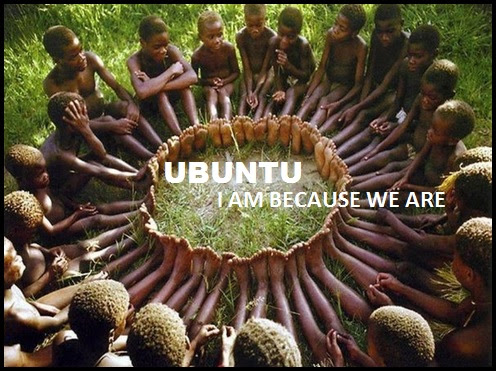
The upshot is, I now have MS Office and this week I did all my writing on MS Word using the APA guidelines I'd studied and written down. So I won't lose any points for that this week I hope. Heather also gave me a program to help with formatting or maybe APA stuff but I haven't figured it out yet. Perrla. Heather's been hard at her Master of Education from a different U.S. university for a while now. So she's given me lotsa good pointers and, if I ever get the time, I have a bunch of her A+ papers I can read and probably get some good stuff from. This week my study topics were education systems from 9 countries around the world including, Iran, Japan, Uzbekistan, India, China, Africa, Afghanistan, Vietnam, the Philippines and some others. I had to compare a "western" and "eastern" education system that was not where I work or where I am from. So I chose Africa and the U.S. I love the African "Ubuntu" pedagogy and used that as a central idea because it's being abandoned in favour of western ideas in Africa, and I think it is exactly what is missing in western ideas of education. It's a beautiful concept.

Answer me this: If you're at the grocery store and you go to the milk section cuz you need milk and you see one carton with an expiration date a week from now. Underneath it are a dozen more with expiration dates TWO weeks from now. You love milk and you KNOW you'll finish the carton in a few days. Do you a) take the carton that expires in a week or b) take a carton from underneath it? More interestingly, why? I think it's got a lot to do with how we're socialized, but also how we're educated. You can say it in positive sounding ways like student-centered education teaching students to be confident and self-sufficient, or you can say that we're taught to be competitive and think of ourselves before other people.

I sometimes wonder if the "Great" Depression or the stock market crash of 2008 would have happened if America hadn't systematically beaten down this Ubuntu kind of cooperative, communal thinking. It's considered indigenous silliness in Africa by a lot of "forward" thinking people. But I think capitalism has subdued any kind of thinking like this all over. Including indigenous people all over North America.

So anyway, that was just one course. The OTHER course I am making contingency contracts with students that contain "fixed interval" or variable ratio schedules of reinforcement... blah blah blah. This is the shyte I was worried most about. Fancy words applied to common sense tactics that almost anybody with half a brain will inevitably employ if emerged into the teaching profession. To give you an idea, a "fixed ratio" is a kind of agreement with students over an amount of responses and the reinforcement it will get them. To be even more childish secret code-like, an FR5 is if 5 people give correct responses, they will receive positive reinforcement. However, FI5, fixed interval 5 means if they don't give those 5 correct responses in a 5-minute interval, they receive negative reinforcement. There are many, many examples like this. Silly. I mean you can't survive as a teacher if you don't learn some of this stuff, or already know it. People have given it fancy sounding names and then claimed it as revolutionary thinking. Now, to be fair, most of these people claiming common sense as their own DID so a long-ass time ago. Before somebody else could do so. And generally, the ones who did so wrote a lot of other stuff, and a lot of that OTHER stuff is really good!

So I'm finding that if you get beyond the obvious stuff that made great educators like Dewey, MLK, Piaget, Horace Mann, and this week Gagne, famous, there is some interesting stuff to learn. I'm pleasantly surprised about that. I was prepared to deal with the Emperor's New Clothes, but I'm enjoying the underappreciated scraps of fabric that I hadn't heard about. It's hard to remain humble when the material for the week is stuff you've already done regularly for many years, just didn't know the name of it, and when the teacher asks you to write about how this "new learning" has "informed your pedagogy." But for two weeks, I've managed. It's really not as bad as that last sentence made it sound either. I AM learning lots of stuff. The nice thing about this course, or one of the nice things, is that we are in constant contact with other teachers. Teachers from all over the world. In communication. I have already learned a lot from them! Collaborative learning like this is something that is only possible online, so it makes these courses a thousand times better than studying with classes full of people who have almost the same educational experiences as you. For a guy who may end up continuing my career in some other countries, this is invaluable experience. And how much have I paid so far for this? Aside from my main expense - staying alive and keeping a roof over my head, I've only paid 60 bucks so far.

 Anyways, I feel SO much better than I would have if I were just getting a subsistence wage from this time! That's all I ever made from Gongju Dae. Instead, I'm losing money, but after each week of study, I feel better, MUCH better, than I would have after every week of teaching. I feel like, in the grand scheme of things, I'm still making money. I just have to postpone the payday for a while.

Not only that, but I'm bulkin' up brain-wise. Reading my weight every week (well, my weight as of last time I was a student) if it were paper pages and not online. Writing more than Stephen King and some is horror actually! The educational environments described by some of my co-students make me really grateful to be in Korea. I complain, but it's a safe, good place to be over here in Asia. You pay for that comfort, and suddenly you pay like 20% more, but it's where I want to do this. And even if I don't get hired on somewhere after the first 6 months of my course, I think I will be able to do another 6 months. So that's what's going on. I type this to inform you but at the same time to remind me of how this time was when I have landed my dream job because of my master's degree and am looking back at the struggle. 

This might be a sweet memory someday when I'm old ER and grey ER.

Tuesday, April 5, 2022

Pneumaticism


 Here are a couple of guys selling fresh, Canadian air for 20 bucks a can. They are making money! $230,000 a year! Granted, those are CANADIAN dollars, but still... 

Being a bit of a jaded, life-hardened, realist, I instantly thought, "Why don't those foolish, lavish, money-wasting people who are buying our air in cans, just buy some bags of Canadian Cheetos or Ruffles and get a few chips with their fresh air?" Here's a study of which bags of chips have the most air for your buck. Word of warning: the breath of air at the top of a bag of salt and vinegar chips might make you cough. 

Here in Korea, chip eaters are suffering too. Unfortunately, the air isn't comparable to that of Canada, so they use nitrogen. Luckily, I haven't breathed the gas at the top of the chip bags here in Korea. Now that I know it's nitrogen, I'll remember to hold the bag at arm's length when I open chips here. As a protest against chiseling chip makers, a couple of students made a raft using 160 bags of chips and paddled across the Han River in Seoul. Well done, lads! But I haven't noticed any improvement yet.

If you suffer through the Canadian Tire commercial at the beginning and the use of "less" instead of "fewer" when referring to the amount of chips in bags, (a common mistake I admit to making for most of my life that has now become an irritant in my grammatically pedantic older age) this isn't a bad report about how a LOT of products, or, rather, their manufacturers, are offering less for the same price or more. They call it "shrinkflation" and I think I started noticing this when I was a LOT younger in a product I haven't seen for probably over 20 years - Wagon Wheels. 

If I'm not mistaken, the ad had a slogan something like, "They're so huge, you have to grin to get them in." The statement put out by the manufacturers is that people think they've shrunk because we remember eating them when we had smaller hands and appetites, but manufacturers give us AIR in all sorts of ways. 

Hearken back to the previous video where the guy says, "Air is free," the term "shrinkflation," and you might also, if you're like me, hearken back to the usage of the word "pneumatic" by Aldus Huxley in "Brave, New World." In the novel, it was used to describe chairs (inflated with air pockets to make them more comfortable) and women. A lot of people think that Lenina's body was described as "pneumatic" because she was a buxom beauty, but I always took it as a reference to her intelligence, or attractive air-headedness as well.  

Let's be honest, an airhead is attractive to a man because she's gonna be easy. We can easily score with her. She'll be easier to persuade into doing what we want her to do. I think the guy who said, "Air is free," is a bit of an airhead himself. Not so much our quotester Habyarimana because he probably only said it satirically in his quote. However, consumers who are airheads are attractive to manufacturers for identical reasons as dumb girls are attractive to the ungentlemanly of us guys in the world. Airhead consumers are more easily manipulated and coerced into doing what the manufacturers want us to do: pay more money for less shit. "Shit," the object, not the act, being an uncountable noun, as opposed to "chips," being a countable noun, receives the quantifier, "less," rather than "fewer," which is the correct choice for "chips" for this reason. Anyway, we are, most of us, Leninas in this way, aren't we? Call it shrinkflation, call it pneumaticism, call it what you will, it's a fact. We pay more and more for less and less. We don't have to, we just do. Because we're airheads. 

Any airhead reading this now think air is free? I'm not going to quibble about the air in the tops of soda bottles or chip bags, we have all paid for THAT air even though the manufacturers didn't. How else do we pay for air? I guess I could talk about the two years I spent in China and how much that cost me in the currency of time on this planet, which becomes more valuable as one ages, but I've talked about that before. It comes off the end of life when I will sweat the expense a great deal less. 

What other sorts of air do we pay for? Through the bloody arse for, if you'll pardon my airy phraseology. You know how old radio shows used to have those lights when DJ's were broadcasting that lit up and said, "On The Air?" Think "Good Morning Vietnam" or "WKRP" if you're as old as I am. That air USED to be free. TV and Radio was once free. Radio has now become Itunes. How do you like THEM Apples? Absolutely nothing associated with Apple is free. And take a drive around any major Canadian city. Go to the downtown area where all the big buildings are. Which one or two is or are the biggest? There's gonna be a massive Roger's building, and you'll also find a gigantic Telus building. Shaw and Bell will be there too. This kind of air is certainly not free! In fact it's the most expensive thing going! Meaning the biggest rip-off. Not only do they charge exorbitant rates for some of the slowest internet speeds in the world, they also force ads onto us even though we are buying their service. More and more ads for higher and higher prices. And we keep pneumatically paying for it.

What's another type of air we pay for? If one considers the amount of "hot air" we are bombarded with from politicians, opinion makers, media and influencers on those "airwaves" we pay so much for on a daily basis, these may be the largest air purchases we make in our daily lives. But when was the last time you flew anywhere. In a sense, when you fly, you are purchasing the air, aren't you? And with a couple hundred billion in losses absorbed by the airlines during the pandemic, the cost of flying anywhere will be "taking off" soon and won't be "landing" until more than the 200 bill has been recovered. It's the way corporations work. Any losses are passed on to the customers... and THEN some. So if I have to do a visa run to renew my D-10 visa or change to a work visa in six months, I'll be taking the ferry to Osaka from Busan. 

In a more concrete example, if you are not convinced that flying is buying air, there is obvious proof that air can be and IS owned. Where? What do you think would happen if you boarded an airplane and flew over Russia right now? Russia's a huge country! And I guess the arbitrary residents and/or the representatives they may believe they have chosen, OWN all that air over their country. In reality it'll be the military that shoots your ass down. They are controlled by the government, which is not so much representing the people, (they wouldn't shoot your ass down) but are representing, and in large part, consist of, the richest people in Russia. 

Finally, the air we probably incur the highest amount of payment and debt from all around the world is the air from which the World Bank, IMF, and other such vulture capitalistic consolidations of paper-printing, nationless, imperialistic power/money, magically materialize the money that enslaves the nations they loan it to. Right now Ukraine is the best example of their handiwork. When the invasion began, the news that the IMF and World bank were negotiating money packages to aid in the Ukrainian defense of their nation was treated as GOOD news in the hot air the media was blowing. But that money was not GIVEN to Ukraine. In fact, during this illegal invasion, Ukraine has actually PAID the IMF and World Bank (which are basically the same assholes I think). This new "heroic" aid package will have massive strings attached to be sure. Like so many of the rulers of our world, who should be making things easier for us after suffering through the pandemic, the IMF and World Bank are seeing Ukraine in an even more disastrous position and they're rushing to them with contracts in one hand and pens in the other, weapons far worse than Putin's tanks and bombs, that will probably bring about the REAL conquest of Ukraine. They should be forgiving debt. The world should be treating the IMF and World Bank the way they're treating Russian billionaires. But how do you sanction an entity that just pulls money out of the air?

I could be way off with this, but the central bank systems that most countries have, whether they want them or not, are pretty much represented worldwide by the IMF and World Bank. They are the central banks of the planet. While most country's central banks have too much power, these two entities have WAY too much power. They're the ultimate in pneumaticism. 

I have heard that Thomas Edison was the hero and friend of Henry Ford and in the Henry Ford Museum in Michigan, there is a test tube that is said to contain Thomas Edison's last breath. It was sent to Ford by Edison's son, Charles. Okay, I think I have just corrected myself. THIS is the ultimate in pneumaticism surely! To believe that someone, possibly his own son, was beside Edison's death bed holding this tube under his nose and capping it after each breath then checking his pulse, uncapping it and placing it under his nose again, and repeat... well you'd have to be an airhead to believe this, wouldn't you? To add to the pure insanity of our world, I guaran-damn-tee there are people who'd probably pay millions for that test tube! Pneumaticism!

So if you've ever looked at the world and thought, "For fuck's sake! Soon they'll be charging us all for the air we breathe, and we'll be stupid enough to pay," well... here we are.

I still have hope though. Not much, but just a breath of airy hope for this world. We need to think of another, much more important kind of air that binds us all together: spirit. Or, as a dude even smarter than Edison might call it, the Aether.